Israel Vote: Right-leaners miss 61-seat target as turnout hits 77%
Benjamin Netanyahu and Gadi Eisenkot both claim mandates to form a government after partial results show neither bloc secured a parliamentary majority.
By Chloe Edwards ·

Benjamin Netanyahu and Gadi Eisenkot addressed their supporters overnight, with both leaders asserting they have the mandate to form Israel's next government. Netanyahu told his celebrating base that the right-wing bloc holds a decisive majority among the Jewish public, though he did not formally declare victory. Eisenkot countered that the public voted against Netanyahu continuing as prime minister, calling for a strong, national government to restore stability.
Partial results indicate that Likud emerged as the largest single party, outperforming early predictions. However, Netanyahu's existing coalition of ultra-nationalist and ultra-Orthodox parties remains just short of the 61-seat majority required in the 120-seat Knesset. Analysts note that early counts were skewed toward right-wing strongholds, leaving the final tally uncertain. Eisenkot's camp, led by the former army chief, appears similarly unable to secure a majority without the support of Arab-led parties, which have matched or exceeded their previous record seat counts.
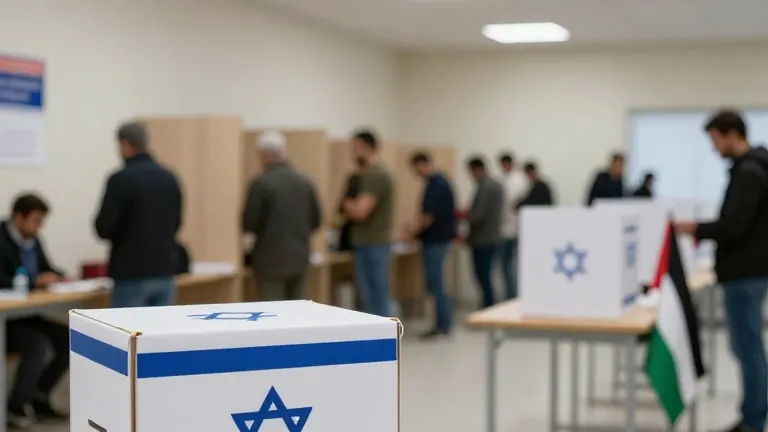
Turnout exceeded 77%, with Arab Israelis, who comprise one-fifth of the population, voting in high numbers. Many viewed this election as a critical vote to displace what they described as Israel's most right-wing government in history. Despite these high stakes, polling data suggests voting patterns have remained stable over the past four years. Professor Tamar Hermann of the Israeli Democracy Institute noted that the relative weight of pro- and anti-Netanyahu supporters has remained consistent since the 2023 Hamas-led attacks.
The path to power now depends on whether the opposition bloc is willing to break with its traditional stance against governing with Arab-majority lists. Avigdor Lieberman, a leader within the change bloc, stated during the campaign that he would not sit in a minority government reliant on such support. Conversely, Mansour Abbas, head of the Ra'am party, expressed confidence in joining the next government. Abbas argued that post-election negotiations would reveal a more open willingness to form an alliance, citing previous coalition experiences.
A major complication remains the high volume of uncounted absentee ballots, primarily cast by Israeli soldiers. This delay means a clear picture of the final results is not expected for another day or two. Veteran journalist Yaakov Katz described the upcoming period as an intense process of political wrangling, where parties will attempt to win over defectors or form minority governments. He warned that this process could take weeks or months if no clear majority emerges.
Israel's president, Isaac Herzog, is scheduled to receive the final results next week. He will then consult with all elected party leaders and task the candidate deemed most likely to succeed in forming a coalition with the job. That candidate has a maximum of six weeks to secure a governing majority. If no coalition is formed within that window, a new election will be triggered, and the current administration will continue in a caretaker role without the power to enact major policy changes.
Source: BBC News