
Cyclone Arnab: India's East Coast Faces Disruption
Winds of 135 kph forced the evacuation of 180,000 residents in Andhra Pradesh and Odisha.
By Benjamin Mahmoud ·
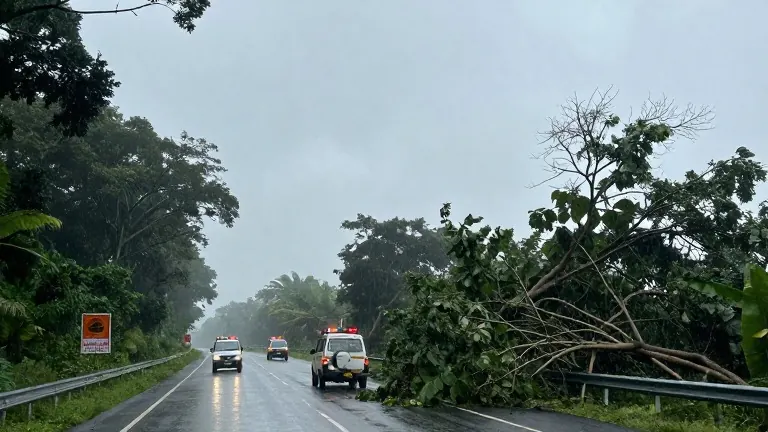
Cyclone Arnab made landfall along India's eastern coast early Wednesday, October 28, interrupting daily life for millions. The storm brought strong winds and heavy rain to the region. Electricity grids failed in several areas, and fallen trees blocked major highways. No deaths had been confirmed as of the latest reports.
Officials moved 180,000 people to safety in Andhra Pradesh and Odisha on Tuesday. This action preceded the cyclone's arrival. The Meteorological Department stated that more than 12 million people live along the storm's expected path. Travel plans were disrupted when airlines and rail operators cancelled services. Several schools closed their doors to protect students.
The storm was classified as a very severe cyclonic storm at the time of impact. This is the third-highest category on the scale used by India's Meteorological Department. The classification was reduced to severe as the system moved inland. The initial landfall delivered both high winds and intense rainfall to the coastal state.
In Kakinada district, residents reported rising water levels that threatened local homes. One resident said, "No one knew whose house the water would rush into next or whose home would be submerged." The uncertainty highlighted the difficulty of predicting which structures would be flooded.
The Meteorological Department forecast a storm surge of up to 1.5 metres above normal tide levels. They warned that this surge could inundate low-lying areas in Andhra Pradesh. The cyclone crossed the coastline on Wednesday morning. The department continued to monitor the system's movement inland.
Warnings extended to Nepal, where authorities advised tourists to avoid high-altitude areas. Concerns included the possibility of heavy rain, snowstorms, and avalanches from Thursday through Saturday. Nepal halted the issuance of trekking permits for three days. This suspension occurred during the peak hiking season, when approximately 750 hikers typically receive permits daily. The country is still recovering from a glacial collapse in August that killed more than 1,400 people and left at least 5,000 missing.
Sri Lanka closed schools as a precaution against the storm. The Department of Meteorology warned that Arnab could trigger flash floods and landslides in the region. The agency issued alerts for residents in vulnerable areas.
Source: Al Jazeera