130 nations back U.N. call to end U.S. Cuba embargo, a drop from prior years
Washington’s diplomatic push led 17 countries to vote against the non-binding resolution, while 25 abstained.
By Chloe Edwards ·
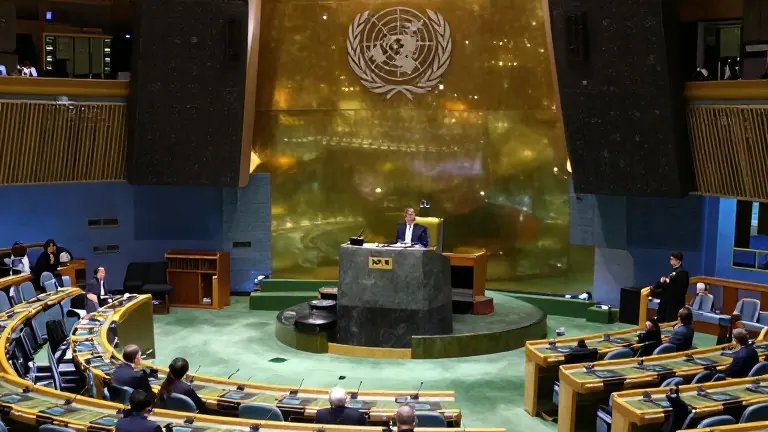
The United Nations General Assembly voted 130 to 17 on Wednesday to condemn the United States economic embargo on Cuba. This outcome marks the 34th consecutive year that the body has passed such a measure. However, the level of support has declined from the previous cycle. In the prior year, more than 160 nations backed the resolution, and only 12 abstained. This year, 25 nations abstained, and the number of votes against the measure rose to 17.
The shift in voting patterns coincides with a renewed U.S. effort to influence the outcome. For the first time in 34 years, Western nations including Germany, Italy, and Latvia chose to abstain. Several other member states voted against the resolution for the first time. These countries included Bosnia, Colombia, Costa Rica, Ecuador, Lithuania, Morocco, North Macedonia, Paraguay, and Slovenia. The resolution is not legally binding, but it serves as an indicator of global sentiment regarding the trade restrictions.
Cuba faces deepening financial difficulties as it manages power outages and supply shortages. The Trump administration has intensified economic pressure to force changes in the island's political system. President Donald Trump recently suggested that American warships might stop in Cuba on their return from the Iran war. He raised the possibility of military intervention during a speech last week.
Cuban Foreign Minister Bruno Rodríguez framed the issue as an economic attack by a major power. He stated ahead of the vote that Cuba is not a threat, while the blockade is. He argued that a great power is using economic war against a member state of the organization. The U.S. position focuses on the political structure of the government in Havana.
U.S. Ambassador to the U.N. Mike Waltz addressed the assembly, telling member nations that their vote stands between the communist regime and another propaganda victory. He described the Cuban government as corrupt and kleptocratic. Waltz urged members not to allow the body to be used for political advantage at the expense of the Cuban people.
Relations between the two delegations have become tense, leading to public disputes on the assembly floor. On Tuesday, Waltz and Rodríguez engaged in a shouting match during debates over the embargo. Rodríguez approached the podium where Waltz was speaking and called him a liar while seeking a point of order. Security personnel attempted to intervene as the exchange continued.
Waltz told the assembly that the Cuban minister was not going to intimidate him in the United States. He instructed Rodríguez to back up, emphasizing that they were in America. Rodríguez responded on social media, noting that Waltz was at the United Nations and not at a White House security meeting. He described the U.S. government's actions as a desperate attempt to justify economic aggression and an energy blockade.
The current diplomatic friction follows a similar incident a week earlier. That exchange occurred outside a U.S.-hosted panel featuring Cuban dissidents and former prisoners. The panel aimed to highlight allegations of oppressive behavior by the island's government. These interactions represent a departure from traditional diplomatic decorum at the United Nations.
The U.S. embargo began in 1960 after Fidel Castro's revolution toppled dictator Fulgencio Batista. The new government nationalized properties owned by U.S. citizens and corporations. Since then, Cuba has dealt with decades of economic and financial strain. In late January, Trump announced tariffs on any country that sells or provides oil to Cuba. This move has effectively cut off fuel to the island, causing widespread power outages that affect water supply, internet, and telephone services.
The next scheduled steps in the diplomatic process involve continued discussions within the General Assembly. Member states will review the implications of the vote for future bilateral relations. The U.S. and Cuba delegations are expected to continue their exchanges in the coming weeks.
Source: The Aegis