NASA Overhauls Lunar Return Architecture to Accelerate 2028 Moon Landing
New docking protocols in Earth orbit and streamlined launch sequences aim to reduce technical risks for the Artemis IV mission.
By Yasmin Farouk ·

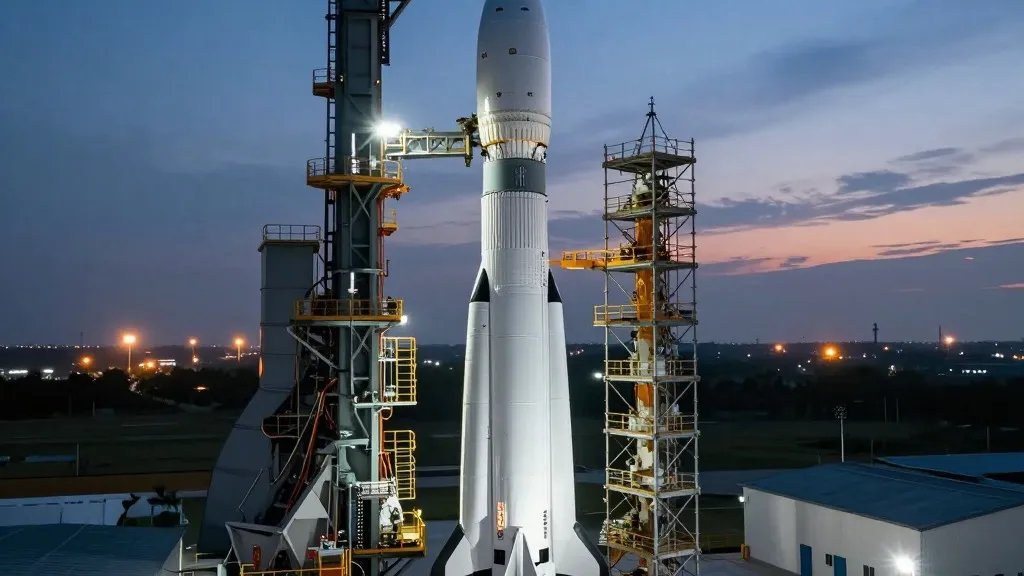
NASA has formally revised the technical architecture for its next lunar missions, establishing a new operational framework that moves critical spacecraft docking maneuvers from the vicinity of the Moon to high-Earth orbit. This fundamental shift in strategy, unveiled during a comprehensive briefing on Friday, represents the most significant structural adjustment to the Artemis Program since its inception and directly impacts the timeline for returning humans to the lunar surface as early as 2028.
The updated plans outline distinct pathways for the two primary lander providers, SpaceX and Blue Origin, each tailored to mitigate specific engineering challenges. For SpaceX, the revised protocol requires the Orion crew capsule to dock with the Starship lunar lander while still in Earth’s orbit, a location that offers greater logistical flexibility compared to previous plans. This change eliminates the need for complex orbital transfers around the Moon before crew integration, a step that had long been identified as a major source of technical risk and energy expenditure.
In contrast, the architecture for Blue Origin centers on the New Glenn rocket, with the mission design specifying four separate launches. Unlike the SpaceX model, the Blue Origin plan does not include any refueling operations between spacecraft in space. Instead, the proposal allows for the Blue Moon lander to rendezvous with the Orion capsule in low-Lunar orbit, a configuration that simplifies the in-space logistics by removing the requirement for propellant transfer between vehicles.
NASA officials confirmed that the agency remains on track for the Artemis III mission, a critical demonstration that will involve docking with both the Blue Moon and Starship vehicles in the vicinity of Earth. This test is currently targeted for a launch in the summer of 2027. Following the success of this demonstration, the agency aims to execute Artemis IV in 2028, which will mark the first crewed lunar landing under the updated architectural parameters.
Administrator Jared Isaacman emphasized the agency’s commitment to this revised timeline, stating that the path forward is achievable given the current resources and stakeholder support. He noted, “This is an achievable path we are on right now. We have the mandate, we have the resources, and the support from our stakeholders to be able to execute, and that’s what we intend to do.” The administration’s confidence reflects a broader effort to streamline decision-making and accelerate development cycles across the program.
The decision to alter the docking location for SpaceX was driven by engineering feedback received during meetings in early 2026. SpaceX engineers had previously argued that the requirement to dock in a near-rectilinear halo orbit around the Moon was overly demanding, citing issues related to energy consumption and operational complexity. The cancellation of the Lunar Gateway station earlier this year inadvertently provided a solution to this problem, as the removal of that infrastructure allowed NASA to reconsider the optimal location for crew transfer operations.
This briefing marks the first time NASA has laid out these substantial architectural changes in such granular detail. While many of the underlying technical shifts had been reported by industry analysts and news outlets, the official presentation confirms that the agency is moving away from its original, more complex multi-vehicle orbital choreography in favor of a more direct approach.
The stakes for these revisions are high, as the success of the 2027 demonstration mission will determine whether the 2028 landing target remains viable. By addressing the specific pain points of its commercial partners and simplifying the orbital mechanics required for crewed flight, NASA hopes to reduce the margin for error in the lead-up to the next lunar surface expedition.
As the agency prepares to move forward with these changes, the focus now shifts to the execution of the Artemis III demonstration. The outcome of this mission will serve as the primary indicator of whether the streamlined architecture can support the ambitious timeline for Artemis IV, effectively setting the stage for humanity’s return to the Moon under a new operational paradigm.
Source: Ars Technica