
Thai Army Upgrades: IWI ARBEL System Turns Standard Rifles Into Anti-Drone Platforms
Thailand approved a $104.4 million emergency fund to bolster border defenses while integrating Israeli fire control technology into existing infantry weapons.
By Chloe Edwards ·
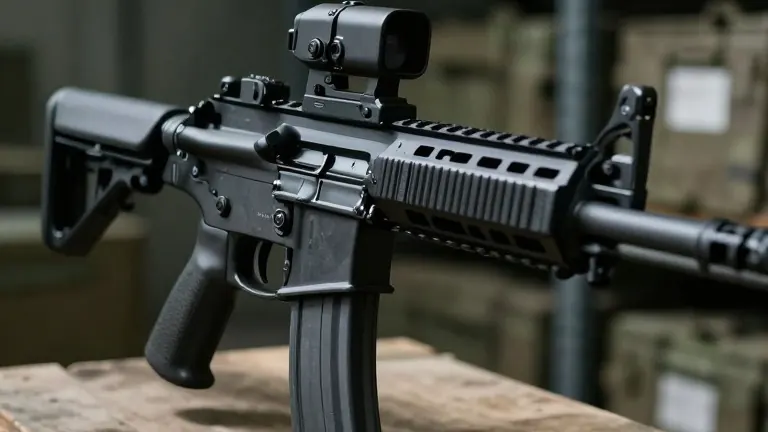
Thailand has integrated the IWI ARBEL Anti-Drone System into its standard infantry rifles, a move that follows the approval of a $104.4 million emergency defense fund. The funding, secured to reinforce defenses along the Cambodian border and replace combat-damaged equipment, coincided with the delivery of the Israeli-made fire control technology to the Thai Defense Ministry.
The ARBEL system transforms conventional infantry weapons into precision-guided interceptors capable of engaging small tactical drones. Developed by IWI after nearly a decade of design work, the platform allows soldiers to use their existing rifles, optics, and ammunition without carrying additional gear. The technology integrates directly into the AR-15 platform, IWI’s ARAD assault rifles, and Negev machine guns.
According to IWI, the system increases the probability of hitting static and moving targets by two to three times. It utilizes electronic sensors and gyros to simplify the shooting cycle, enabling effective target engagement within a few seconds. The system can hit targets up to 450 meters away using standard 5.56 mm ammunition, depending on the selected firing mode.
The integration process required on-site training from IWI officials for Thai troops. Ronen Hamudot, vice chairman of SK Group, stated that the system provides soldiers with an effective means of defending against a growing threat. He noted that the technology gives armed forces a tactical advantage in complex battlespaces where small drones pose a direct risk to personnel on the ground.
The ARBEL unit adds only 900 grams to the weapon and meets MIL-STD-810 military standards for reliability in extreme conditions. It is battery-operated with a 50-hour continuous operation capacity. The system is optic-agnostic and mission-configurable, with a built-in fire control mechanism that releases rounds only when the shooter is stable on the target. IWI said the technology compensates for shooting errors caused by heavy breathing, fatigue, and stress during combat.
Thai military officials selected the integration approach to upgrade existing platforms locally without replacing entire rifle inventories. Doron Korol, SK Group vice president for the Asia-Pacific region, said the adoption reflects a growing operational priority among Southeast Asian militaries for counter-drone capabilities. He observed rising regional demand for solutions that help soldiers meet this specific challenge.
Thailand is part of a wider modernization effort that includes the purchase of Israeli long-range Rampage standoff missiles, bunker-buster bombs, and HIMARS artillery upgrades. The Royal Thai Air Force plans to procure 20 Rampage missiles for its F-16 fighter aircraft, valued at approximately $30 million. The Royal Thai Army will also acquire M777 howitzers and Stryker armored vehicles to replace older systems.
Thailand has acquired Israeli defense technology since the 1970s, a relationship that has deepened through knowledge transfers for local manufacturing. IWI stated that Thai officials are in discussions for an additional order of the ARBEL system. The company expects to announce further deployments in other countries within the coming months as procurement processes advance.
Source: The Jerusalem Post