iPod marked Apple's music market entry
Two decades and five years ago, a $399 portable player established Apple's dominance in the digital music sector.
By Chloe Edwards ·
The consumer electronics market in the early 2000s was fragmented, lacking a definitive leader in portable audio. On October 23, 2001, Apple disrupted this landscape by introducing a device that redefined the category.
Apple CEO Steve Jobs unveiled the original iPod during a presentation where he teased a breakthrough device that was not a Mac. The product launched at a price point of $399, with the central marketing claim that it could store a user's entire music library in a pocket-sized form factor. The device featured five gigabytes of storage, which allowed it to hold approximately 1,000 songs. Specifically, this capacity referred to 1,000 typical pop songs encoded as MP3 files at 160 kilobits per second. At the time of the announcement, the market offered four mainstream portable digital music solutions: CD players, MP3 CD players, flash-based players, and hard disk-based jukebox players. Jobs identified the hard disk-based option as the optimal entry point for Apple, despite the presence of competitors such as Creative, Sonic Blue, and Sony. He noted that while these companies had products available, none had yet found the correct recipe for digital music success.
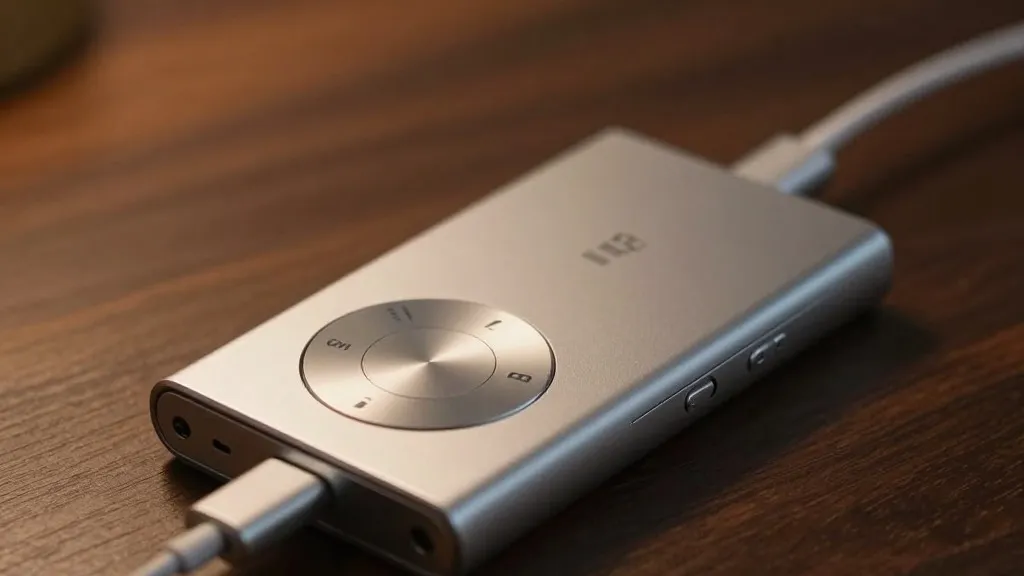
The physical design of the iPod was a critical differentiator in a crowded market. The device measured 2.4 by 4 by 0.78 inches and weighed 6.5 ounces, making it lighter than most cell phones of that era. Its compact size was achieved through the use of a Toshiba 1.8-inch hard drive that was only 0.2 inches thick. The form factor was described as being the size of a standard deck of cards. The device offered CD-quality sound and supported MP3, WAV, and AIFF file formats. It also included features such as 20-minute skip protection and fast file transfer capabilities. A key technical advantage was the inclusion of a FireWire 400 connection, which Apple promoted as the first and only music player to feature this interface. Jobs claimed this connection could transfer an entire CD of data in five to 10 seconds, whereas USB connections of the same period required approximately five minutes for the same task. Consequently, filling the device with 1,000 songs took an estimated 10 minutes via FireWire, compared to five hours for a USB-based player.
The device was powered by a rechargeable lithium-polymer battery that provided 10 hours of continuous playback. Apple stated that the battery could be recharged to 80 percent capacity in one hour. The interface featured a piezoelectric clicker scroll wheel designed for single-hand use, providing tactile feedback for fast navigation by playlist, artist, or song. During the launch event, the first song demoed on stage was 'Building a Mystery' by Sarah MacLachlan.
The commercial strategy relied heavily on software integration. Jobs highlighted the Auto-Sync feature, which allowed the portable player to synchronize automatically with iTunes digital music libraries. iTunes 2 launched on the same day, introducing MP3 CD burning and syncing support for the new hardware. This integration meant that libraries curated on a Mac would remain synchronized with the pocket player during transfers or charging. The iPod also functioned as a FireWire hard disk drive.
The launch occurred during a period of recovery for Apple following the dot-com bubble burst. The company had successfully transitioned to the Mac OS X era with the iBook and iMac lines. Jobs envisioned the Mac as the center of a digital lifestyle, acting as a hub for various devices. The iPod was positioned as the portable component of this ecosystem, targeting the massive market of music lovers.
The original iPod initiated a product line that would coexist with the iPhone, which launched in early 2007. Both devices remained in Apple's product stack for over a decade. The iPod line eventually faded as smartphones matured, with the final model, the 7th-generation iPod Touch, released in May 2019. Although the product line was left unmaintained for several years, it was officially discontinued in May 2022.
The success of the original device set the stage for a new era in personal media consumption, establishing a template for how technology companies would integrate hardware and software to capture market share. The initial launch demonstrated that a focused, high-quality product could dominate a niche even in the presence of larger competitors.
Source: Tom's Hardware · original report published
More Business · Scam Watch · Report a business · Got a Story?