Philadelphia trains voters on de-escalation tactics ahead of November election
Local groups urge citizens to document, not confront, as federal agents and political activists raise stakes at polling places.
By Pablo Harrison ·
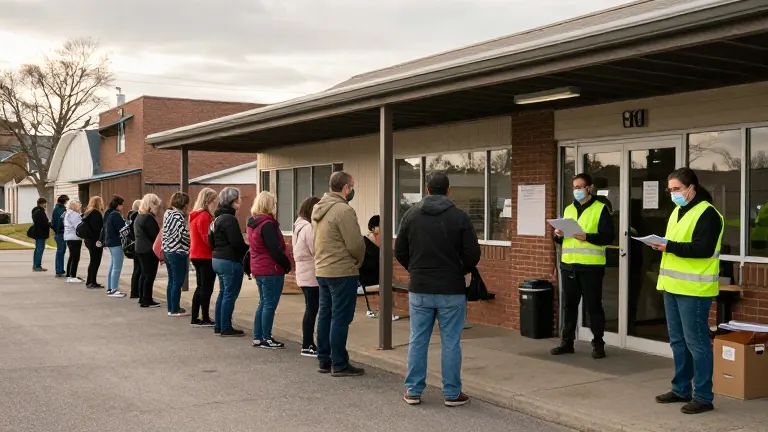
Philadelphia’s election officials and community organizers are preparing for a potentially volatile November ballot season, citing recent examples of tension at polling places. The focus has shifted from simple observation to active de-escalation, a strategy aimed at protecting voters while minimizing conflict with agents or activists.
Eileen Flanagan, a Quaker author and activist, led a training session last week hosted by The Philadelphia Citizen and Changing the Conversation Together. The session was designed to equip citizens with specific tools to manage voter intimidation. Flanagan noted that the training serves as a fire drill, allowing participants to practice responses to scenarios that hopefully will not materialize.
The urgency of such preparation stems from recent events and political rhetoric. Flanagan referenced a 2020 incident in West Philadelphia’s Clark Park, where counterprotesters arrived for an anticipated rally by the Proud Boys. No far-right group appeared, yet a confrontation erupted. A car window was smashed, and the incident was broadcast on Fox News. The episode illustrated how the inability to distinguish between a rumor and a real threat can escalate a situation.
Flanagan teaches a four-step acronym known as ABCD: Assess, Breathe, Choose, and De-escalate. The first step requires an accurate assessment of the threat before acting. The second involves mindfulness of physical stress responses. The third step is choosing how to react, or deciding not to react at all. The final step is lowering the temperature of the interaction.
Participants are advised against acting as lone heroes. Flanagan stated that deciding what meets the legal definition of voter intimidation is the role of lawyers, not observers. The primary task for citizens is to take clear notes and photographs to provide evidence to the appropriate legal representatives.
Specific tactics include delegating communication tasks. Flanagan recommends that only one member of a group call authorities to avoid overwhelming emergency lines. She advised calling local police only if there is a threat of violence. In other instances, contacting a lawyer or the Judge of Elections is the preferred course of action.
Observers should document suspicious activities, such as agents asking for IDs before polls open or recording license plates. Flanagan warned against posting such evidence on social media immediately. Instead, the information should be held as evidence for lawyers on call throughout the day.
The presence of federal agents remains a primary concern. While the Immigration and Customs Enforcement agency is the most cited worry, other forces are active. During the recent mayoral primary in Washington, D.C., members of the National Guard were deployed to monitor polls. This caused bottlenecks at some locations. Volunteers responded by escorting voters through back entrances that the Guard had ignored.
Citizens in Philadelphia who observe suspicious or nefarious activity near a polling place should call the City Commissioners office at (215) 686-1591. Those outside the city should contact their county election board or the Pennsylvania voter hotline at (877) 868-3772.
Source: The Philadelphia Citizen