NOAA Forecasts Warm, Wet Winter as 'Super' El Niño Takes Hold
The National Oceanic and Atmospheric Administration predicts above-average temperatures and precipitation across much of the U.S., with specific risks for coastal flooding and regional drought relief.
By Chloe Edwards ·
The National Oceanic and Atmospheric Administration predicts a warmer and wetter winter across the continental United States due to a powerful El Niño event. NOAA Director Ken Graham described the current conditions as a strong, if not historic, El Niño. This atmospheric pattern is expected to shift global weather, bringing above-average temperatures to most of the country. Precipitation levels will vary by region, with some areas facing increased rainfall and others seeing drier conditions.
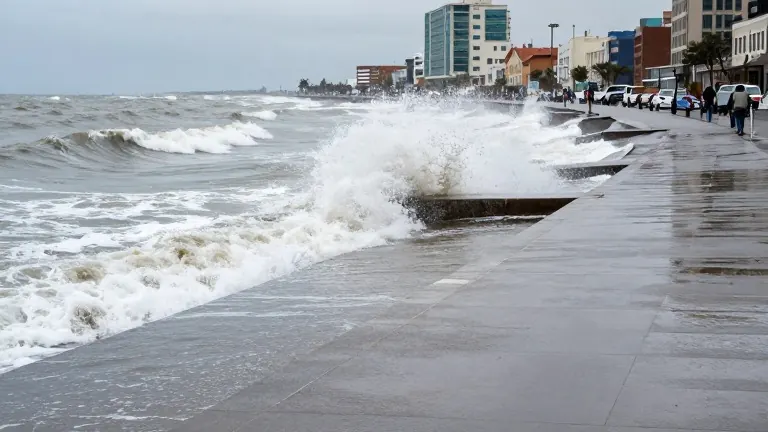
On the West Coast, forecasters anticipate above-average precipitation in California, particularly in the south. A Kelvin wave, a large band of warm water, has already raised sea levels along the Pacific. This phenomenon increased the risk of flooding during Tropical Storm Rachel in early October. Another Kelvin wave is currently moving between Los Angeles and San Francisco. Additional waves are expected through the fall and early winter. These events increase the likelihood of coastal flooding when combined with high tides.
The Southwest is already experiencing the forecasted wetter conditions. Severe flooding in the Four Corners region in late October forced rooftop rescues and evacuations. Climate scientist Daniel Swain attributed the severe thunderstorms to moisture from record-warm waters off the West Coast. Swain noted that this moisture is driven by El Niño and a recent marine heat wave. He emphasized that while these rains are significant, they will not fully resolve the long-term water crisis in the Colorado River basin. Reservoirs like Lake Powell and Lake Mead remain at record low levels.
In the South, the probability of above-average precipitation is the highest in the nation. Northern Texas, southern Georgia, and parts of South Carolina are expected to see significant rainfall. Florida is preparing for heavy downpours in areas that typically do not experience such weather. This follows a quiet Atlantic hurricane season that produced only one named storm, Isaias. Historical data indicates that El Niño years often correlate with higher tornado risks. In 1998, Central Florida experienced a deadly tornado outbreak that killed 42 people during a similar climate event.
The Midwest is forecast to see a smaller snowpack than normal due to warmer temperatures. Michigan, Ohio, and Indiana tend to be drier during El Niño winters, while Iowa typically receives more rain. NOAA meteorologist Jon Gottschalck stated that drought conditions are expected to persist in the Midwest. He noted that there is growing concern the current drought may worsen rather than improve. These conditions affect water resources and agricultural planning across the region.
The Pacific Northwest will likely experience warmer temperatures but below-average precipitation. Without sustained cold weather, the region may see a smaller snowpack, which impacts water storage for summer. Communities along the coast are reinforcing infrastructure to prepare for potential flooding from high tides. In parts of Western Washington and Oregon, the wetter conditions may help alleviate multi-year droughts. Gottschalck predicted that dry conditions in these areas could improve, potentially ending current drought situations.
Source: WYPR