First-Time Directors Explain Budget Paths
Five Japanese filmmakers discussed how unconventional financing and creative freedom shaped their debut features at the Tokyo International Film Festival.
By Benjamin Mahmoud ·
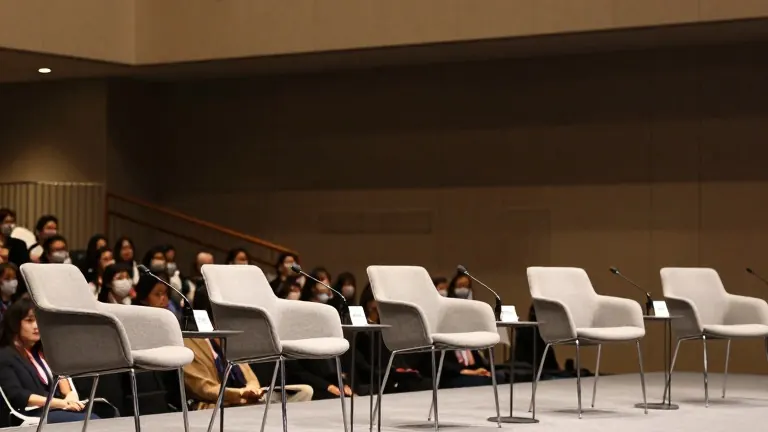
Five debut Japanese directors presented their films at the 39th Tokyo International Film Festival on Wednesday, detailing how limited resources and direct industry contacts enabled their theatrical releases. The 'How We Make Films' panel took place at Tokyo Midtown Hibiya and was moderated by programming director Ichiyama Shozo.
The session featured Ueda Shinichiro, Saito Kisin, Natori Satoshi, Matsumura Shingo, and Yaza Takenoshin. Their projects vary in style and subject matter, but all emerged from non-traditional production pipelines. Ueda's 'Earthlings in Love' utilizes a vertical aspect ratio because it adapts a 30-episode social media microdrama. He stated the budget matched a standard independent film, allowing the team to treat the project as a theatrical release from the start.
Saito Kisin's 'Kefi' began as a sponsored project with a specific theme of maternal love. The sponsor later granted the team full creative control, resulting in a narrative about three sisters dealing with their father's death. Saito described the final product as strange but cohesive, noting that the financiers stepped back after the initial pitch.
Natori Satoshi set 'Chihiro | Akemi' in eastern Hokkaido, drawing on his experience as a hunter. He compared the repetitive cycle of hunting to his life in Tokyo, where he previously worked in advertising. The film won the Grand Prix at the Split Film Festival in Croatia. Director Carlos Reygadas, who served on the jury, expressed interest in a future collaboration after seeing the film. Natori cited Andrei Tarkovsky's 'Nostalghia' as a key influence, prioritizing texture and color over plot.
Yaza Takenoshin secured cinematographer Kitagawa Yoshio for 'Hinotama: Ball of Fire' by sending a direct message. Kitagawa, known for work with Hamaguchi Ryusuke, offered to shoot the film and connected Yaza with a producer. This producer then approached financiers. Yaza, who had never made a feature, described the set atmosphere as generous and open-minded despite his lack of experience.
Matsumura Shingo discussed 'Between Us,' which explores the overlap between theater and reality. He noted he had wide latitude with the film's concepts. The group concluded that personal satisfaction and unique creative choices define their debut works.
Natori emphasized the value of making a film one can only create during a first attempt. He suggested that his next project could become a Japan-Mexico collaboration following his meeting with Reygadas.
Source: Variety
More Business · National news · Scam Watch · Report a business · Got a Story?