A 22-Year Gap: Columbia Residents Waited Two Decades for a Local Cemetery
Developer James Rouse founded the community in 1967 without plans for burial, leading to a 1989 opening after a long campaign by local residents and faith groups.
By Pablo Harrison ·
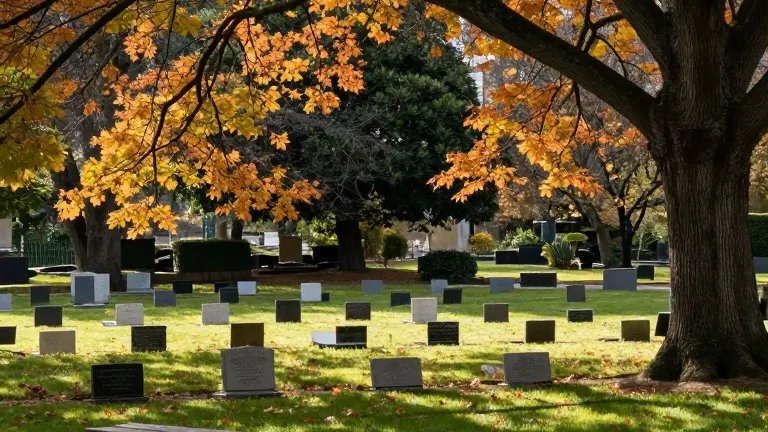
When James Rouse founded Columbia in 1967, he described the project as a garden for growing people, yet his initial plans contained no space for the dead. This oversight meant that residents of the new planned community had nowhere local to be buried for more than two decades. The situation persisted until 1989, when Columbia Memorial Park finally opened its gates off Clarksville Road.
The absence of a cemetery became a practical concern for residents almost immediately. In the late 1960s, members of the Columbia Cooperative Ministry, an interfaith social organization, raised the issue with Rouse. Suzanne Waller, a ministry member and friend of the developer, recalled that Rouse was startled by the observation and agreed that the need was real. The ministry subsequently formed the Howard County Memorial Foundation in the early 1970s to explore affordable, multi-faith burial options.
The search for a suitable site took nearly a decade. In March 1978, Howard Research and Development Corp., a subsidiary of The Rouse Company, identified land available off Clarksville Pike. Michael D. Spear, the executive vice president at the time, wrote to the cemetery group expressing excitement about a site that would preserve natural features and enhance wildlife habitat. He noted that Columbia was in real need of a cemetery and anticipated continued work in the coming months. Those months stretched into nearly 11 years before the property was secured.
The Howard Hughes Corp. sold the 10-acre site, located next to Clarksville Elementary School, to the cemetery organization in 1988 for $200,000. The Rouse Company selected Harvey Geller to develop the project. Geller, a Bethesda resident who owned cemeteries in Virginia and Pennsylvania, viewed the project as a chance to build a cemetery from scratch. The resulting Columbia Memorial Park spans 38 acres and features traditional ground burials with flat markers, lawn crypts, and a scattering garden for ashes. The grounds include specific sections for Jewish and Muslim community members, a chapel in the woods, and a burial garden for children.
The development reflects the inclusive nature of the community’s founding. Marge Goethe, a foundation member, wrote that one resident suggested the cemetery serve as a museum of Columbia’s people. The design prioritized the existing vegetation and wildlife. Lynne Warshaw, who moved to Columbia in 1969, told The Washington Post in 1988 that having a local cemetery would round out the life cycle for residents. She added that although the Warshaws did not grow up in Howard County, they felt it was their home and where they wished to be buried.
Ownership of the cemetery has changed hands since its opening. Geller sold the property in 1999 to Cornerstone Family Services. That entity later became StoneMor Partners L.P., a publicly traded company in 2004. In 2022, the New York-based hedge fund Axar Capital Management took the company private, and it rebranded as Everstory Partners in 2023. Neither Everstory nor the cemetery made a representative available for comment for this article.
James Rouse died in 1996 and is buried in the cemetery he helped create. He rests with his second wife, Patricia Traugott Rouse, under a shady tree in a picturesque section. Their plot features a low-slung bench with the family name and flat metal plaques. Erin Berry, an archivist for the Columbia Maryland Archives, noted that the process of residents coming together to build the cemetery speaks to the community's diversity and inclusivity. She said they needed an inclusive place to bury their dead because they could not find one elsewhere.
Source: The Baltimore Banner