
200 researchers sign petition against Johns Hopkins supply store cuts
The new procurement model, effective October 1, is expected to add thousands of dollars in monthly costs to individual laboratories.
By Benjamin Mahmoud ·
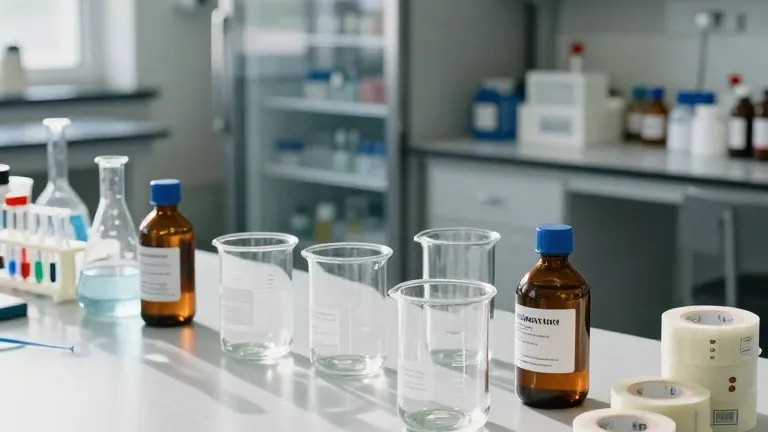
Johns Hopkins University recently altered its procurement model for laboratory materials, a change that has prompted a formal response from the graduate research community. On October 1, the university reduced operations at the Supply Stores located in Mudd Hall and the Pre-Clinical Teaching Building on the Homewood and East Baltimore campuses. This shift moves the responsibility for purchasing and receiving basic items from centralized university staff to individual departments.
The primary concern for researchers is the direct financial impact on their budgets. Graduate students estimate that the additional costs for basic supplies will range in the thousands of dollars per month. Previously, the Supply Stores purchased materials like gloves, labeling tape, and cellular media at institutional prices without requiring individual orders. Under the new model, labs must order directly from vendors such as Thermo Fisher, Millipore, and Genesee Scientific, which leads to longer delivery times and higher unit costs.
Operational burdens have also shifted to departmental administrative staff. The Supply Stores previously managed the shipping, receiving, and storage of temperature-sensitive reagents in dedicated refrigerators and freezers. Departmental offices now assume these duties without equivalent storage infrastructure. Sneha, a sixth-year Ph.D. student in Biology, noted that this lack of capacity could result in the degradation of expensive materials. In Chemistry, a local stockroom may cover about 75% of previous needs, but researchers must still source the remainder directly from vendors.
The change has generated a petition with more than 200 signatures from faculty, staff, and students. The group argues that the decision was announced suddenly in August with insufficient input from researchers. A University spokesperson stated that communications with divisions began in early August and that the reduction is due to changes in purchasing patterns. The university maintains that the new model preserves access to items requiring specialized handling or regulatory support.
A spokesperson confirmed that the university responded to the petition on October 16. The response noted that the university is working with the Teachers and Researchers United Union through established processes to address work-related concerns. The new operating model applies exclusively to the JHU Procurement-managed Supply Stores and does not affect other university supply channels or local stockrooms.
Marie, a sixth-year Ph.D. student in Biology, reported that many workers observed supplies dwindling throughout September, even though the stores were expected to maintain full inventory through September 30. The university intends to act on the petition shortly, according to administrators who have shared this timeline with the research community.
Joanna, a sixth-year Ph.D. student in Chemistry, stated that administrators and researchers have avenues for collaboration to address both research needs and operational limitations. She suggested that increased communication would help the administration find constructive solutions that work for the entire university community.
Source: The Johns Hopkins News-Letter