1.5-ton NASA telescope to reenter Earth's atmosphere on Friday
The Swift Observatory, which detected over 3,400 cosmic explosions, will burn up after a failed robotic rescue left it in a decaying orbit.
By Chloe Edwards ·
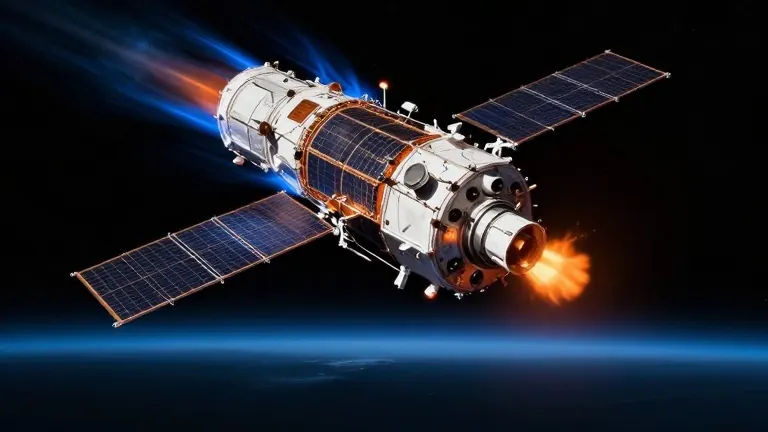
A failed robotic rescue mission has left an aging NASA telescope in a decaying orbit, with the U.S. Space Force predicting it will reenter the atmosphere on or around Friday. The Swift Observatory, weighing 1.5 tons, has been in space since November 20, 2004, and its trajectory is now on a final downward path toward Earth.
NASA mission chief scientist Brad Cenko stated that most of the instrument will burn up during descent. However, he noted that specific components made of tungsten, a metal denser than lead, along with certain mirror parts, could survive the reentry. The Space Force is currently tracking the shrinking ground track of the falling hardware.
While the ocean is the most likely landing zone for any surviving debris, the reentry corridor spans several landmasses. Swaths of Africa, Australia, India, Southeast Asia, and Central and South America fall within the potential impact area. The telescope’s orbit dropped faster than planned due to intense solar activity over the past several years, which increased atmospheric drag on the spacecraft.
NASA contracted Katalyst Space a year ago to perform an emergency maneuver to save the observatory. The company launched a three-armed robot named Link in July to attach to the telescope. Link encountered technical issues and failed to get closer than 7 to 9 miles from Swift. The robot eventually fell back to Earth in September, ending the rescue attempt.
Swift resumed scientific operations after the rescue was cancelled. It continued to detect gamma ray bursts and other high-energy events until late October, when its orbit became too low for stable observations. Engineers then shut down its systems. John Nousek, an astronomer at Pennsylvania State University who led the control team, said the team has known this day would come since before launch.
During its 22 years in orbit, Swift identified more than 2,000 gamma ray bursts and 1,400 exploding stars. It also cataloged numerous comets, asteroids, and black hole events. The telescope served as a first responder for other observatories like Hubble and Webb, which used Swift’s alerts to conduct deeper studies. Scientists are currently determining how to replace Swift’s rapid response capabilities.
Source: The Aegis